Tackle Battle:Send Them Flying
KAYAC Inc.Action
4.595.00 Reviews
- Version
- 060
- Installs
- 5.00M
- Age Rating
- Teen
Screenshots
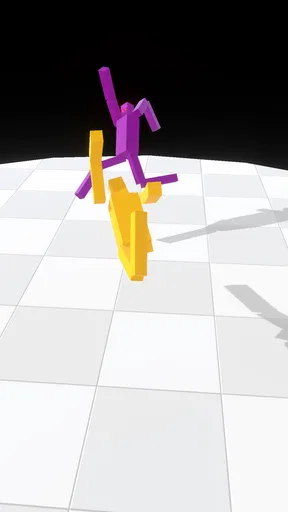
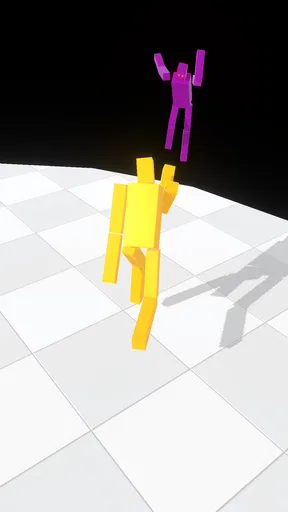
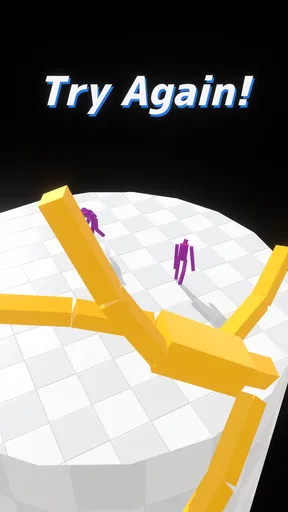
Our Review of Tackle Battle:Send Them Flying
 Analysis by Appyee
I spent time with Tackle Battle:Send Them Flying as a quick-action game built around one simple idea: hit your opponents hard enough to knock them out of the fight. That focus makes it immediately understandable, but the real question is whether the short, physical encounters stay enjoyable after the first few rounds. My experience is that the game works best when I want something direct, energetic, and easy to start without learning a large set of rules.
Developed by KAYAC Inc., this free action game has a 4.5 average from around 7.8 thousand ratings and has passed 5 million installs. Those figures suggest that its uncomplicated tackle-and-launch premise has found a sizeable audience. It is rated Teen, so I would not treat it as a children’s game despite the cartoon-like simplicity of the concept. The game was released on February 4, 2025, and version 059 is the current version I reviewed.
How the action feels when you want a fast match
The strongest part of the experience is how quickly it communicates its objective. I do not need to spend much time studying a complicated interface before understanding what I am supposed to do: approach an opponent, make contact, and send that opponent flying. That makes it a natural choice for a short break, especially when I want action rather than a long story, detailed character building, or a strategy game that demands several minutes of preparation.
The pace feels more dependent on the rhythm of each encounter than on a huge amount of content surrounding it. A good round has a pleasing sense of momentum because the central action is physical and immediate. The satisfaction comes from timing contact and seeing the result, not from managing a large inventory or reading layers of menus. I found that clarity useful when returning to the game after a gap: I could remember the basic purpose almost instantly.
That simplicity is also the first important trade-off. Players who expect a deep fighting game may find the design narrow. This is not the kind of action title I would choose when I want a long list of techniques, a complex competitive system, or a carefully developed narrative. Its appeal is closer to a focused arcade challenge. It gives me a clear activity and asks me to improve my handling of that activity rather than offering many unrelated systems.
For everyday use, I would place it between a traditional arcade game and a lightweight battle game. It is more active than a passive time-killer, yet less demanding than a full fighting game. If I have a few spare minutes while waiting for an appointment, the direct premise makes it easy to play without committing to a long session. If I am looking for something calm, however, the tackle-focused action may feel too abrupt.
What makes the movement satisfying
The physical feedback is the main reason to keep playing. Knocking an opponent away creates a clear cause-and-effect loop: I make a move, the opponent reacts, and the result is easy to recognize. That clarity matters more here than a complicated scoring explanation would. I can tell whether my approach worked, and that gives each successful collision a small burst of satisfaction.
I also noticed that the game rewards attention to positioning more than random movement. Charging forward without considering where the opponent is standing is not always the best choice. A better habit is to watch the available space, approach with purpose, and think about where the impact will leave both sides. That is one of the less obvious lessons of the game: the goal is not merely to touch an enemy, but to make contact in a way that produces a useful result.
When several opponents are involved, I would avoid treating every target as equally urgent. The nearest enemy may be the easiest to reach, but the most useful target can be the one threatening your route or occupying the space you need. This makes the simple control idea more interesting than the store summary suggests. Even without a large rule set, I can improve by changing the order in which I engage opponents.
Smart habits for short sessions
My first practical tip is to avoid rushing every encounter. The game invites an aggressive approach, but a brief pause to read the situation can prevent a weak tackle. I found it more useful to enter an encounter with a clear target than to move constantly and hope that contact happens. That small change makes the action feel more deliberate and helps reduce the frustration of failed attempts.
A second useful habit is to use the edges of the play area carefully. Space is valuable in a game based on sending enemies away, and standing in a poor position can limit the result of an otherwise good attack. I would try to keep enough room to approach and recover rather than placing myself where a missed tackle leaves no comfortable follow-up. This is especially relevant during heavier moments, when several decisions arrive close together.
Finally, I would treat recovery as part of the attack rather than an afterthought. After a collision, I do not immediately assume the encounter is finished. I check where I have ended up, identify the next threat, and then choose whether to continue pressing forward or reset my position. That habit makes the game feel less random and gives the short battles a little more tactical shape.
Speed, stability, and heavier play sessions
In normal use, the game’s focused design gives it a quick-feeling character. There are not many layers between starting an encounter and performing the central action, so it does not feel weighed down by extensive preparation. I would describe the perceived speed as one of its strengths: the game gets to the point quickly and keeps attention on movement and impact.
That does not mean every player will experience the same responsiveness. Action games are sensitive to touch timing, screen size, and the condition of the device. A player using an older phone may notice that precise movement feels less comfortable than it does on a newer device, even if the game itself remains playable. I would judge the experience by how reliably my intended movement appears on screen, not simply by how quickly a menu opens.
During a longer session, the main source of pressure is likely to be repetition rather than a complicated resource system. The central tackle loop is easy to understand, which is excellent for accessibility, but it also means the game must hold my attention through the quality of encounters. I enjoyed it more when I treated each round as a small positioning challenge instead of repeating the same forward rush.
This is where the game differs from more elaborate alternatives in the action category. A conventional fighting game may offer more variety through combos, character abilities, or detailed matchups. A strategy battler may give me more time to plan. Tackle Battle:Send Them Flying is better suited to the player who wants immediate physical interaction and does not want to spend a session learning a broad system. The trade-off is that players seeking long-term mechanical variety may reach its limits sooner.
What happens during repeated play
For repeated use, I would keep sessions flexible. A short run is a good fit when I want a burst of action, while a longer session should include occasional pauses if the repeated impacts begin to feel samey. This is not a criticism of the controls so much as a realistic expectation of a game built around one dominant action. Its simplicity is the reason it is approachable, and also the reason it may not satisfy every player for an entire evening.
Heavy use can also expose practical issues that are easy to miss in a single test session. Touch-based action depends on keeping a clear view of the screen and maintaining consistent input. If I am playing while walking, riding in a vehicle, or holding the phone awkwardly, I would expect my own handling to become less reliable. The game is better enjoyed when I can give the screen my attention instead of treating it as something to operate absent-mindedly.
One of the more useful ways to play is to set a small personal goal for each session. I might focus on cleaner approaches, better target selection, or recovering more quickly after a failed tackle. That keeps the simple structure from becoming mindless. It also gives me something concrete to improve without pretending that the game is a full competitive simulator.
Reliability and returning to the game
The current version, 059, is a reassuring sign that the game is being maintained as a living release rather than left untouched after launch. I still prefer to evaluate reliability through ordinary use: whether the game starts cleanly, whether the controls remain understandable after returning, and whether a brief session feels consistent. On those terms, its compact design helps because there are fewer systems I need to remember before playing.
Recovery is particularly important in a game this direct. If I make a poor approach or lose control of an encounter, I want to understand how to get back into a useful position rather than feeling that the entire session has been ruined. The best response is to slow down briefly, identify the immediate threat, and rebuild the next move from the current layout. That approach turns a mistake into information instead of encouraging random retries.
I would also recommend closing and reopening the game if performance begins to feel unusual after extended phone use, especially on a device already handling many other applications. That is general mobile housekeeping rather than a claim about a specific fault in this game, but it is sensible for any action title where timing matters. Keeping the phone from becoming overloaded can make the experience feel more predictable.
The Teen rating is worth considering before installing it for someone younger. The premise is stylized and straightforward, but the intended audience is not presented as young children. Parents should make their own decision based on the child and the way the game is used. For adult players and teenagers who enjoy uncomplicated action, the rating should not be surprising.
Device expectations and practical limits
The minimum operating system is Android 6.0, which makes the game accessible to a broad range of Android devices in principle. That does not guarantee identical comfort on every phone. An older handset may meet the operating-system requirement while still offering a smaller display, less comfortable touch response, or less headroom during extended play. I would be more confident recommending it to someone with a reasonably responsive touchscreen than to someone using a very old phone mainly for basic tasks.
Resource demands are best judged conservatively. The game’s focused action does not give me a reason to expect the same workload as a large open-world title, but I would not promise identical performance across all hardware. If your phone already struggles with animated games, keep expectations modest. The most important practical test is whether movement and contact feel dependable on your own device, because even a visually smooth game is frustrating when input arrives late or feels imprecise.
Screen size can change the experience as well. A compact phone may be easy to hold but leave less room for reading the action, while a larger screen can make positioning easier but may require more hand movement. I found that a comfortable grip matters because the game asks for active interaction rather than occasional tapping. Players with limited one-handed reach may prefer using both hands or adjusting their grip between encounters.
Battery use is another reason to keep expectations realistic during long sessions. Action games generally encourage continuous screen activity, so I would not choose this as a background game to leave running for hours. It makes more sense as a focused burst: play, pause, and return when I actually want the physical challenge. That pattern also suits the game’s short, repeatable nature.
Who should choose it, and who should skip it
I would recommend it to someone who likes arcade-style action, wants a clear objective, and enjoys improving through timing and positioning. It is also a good candidate for players who dislike complicated tutorials. The low barrier to understanding lets me begin with the basic idea and gradually refine how I approach opponents, which is more satisfying than being buried under instructions.
I would be more cautious recommending it to someone who needs a deep story, extensive progression, or a wide selection of play styles. If your favorite action games are built around elaborate combos, careful character customization, or long-form competitive analysis, this may feel too focused. In that case, a traditional fighting game is likely the better choice. If you prefer planning several moves ahead and minimizing direct reflex work, a strategy game may suit you more.
The free price lowers the barrier to trying it, but “free” does not automatically make every session valuable for every player. I would install it when I want a quick, physical challenge and remove it if the repeated tackle loop no longer gives me anything to improve. Its value comes from how well that central interaction matches my mood, not from pretending it replaces every other kind of action game.
My performance verdict
After using it as a quick action game, I see its greatest strength in the combination of immediate rules and readable physical feedback. I can understand the goal quickly, start playing without a long setup, and improve by paying closer attention to approach, space, and recovery. Those details give the simple premise more depth than a single-line description would suggest.
Its limitations are equally clear. The narrow focus may become repetitive for players who need constant mechanical variety, and performance comfort will depend on the phone’s touch response, screen, and general condition. I would not choose it as a replacement for a full fighting game or a story-driven action adventure. I would choose it as a compact arcade experience that asks me to act decisively and learn from each collision.
Overall, Tackle Battle:Send Them Flying is worth trying if you want fast, uncomplicated battles and enjoy the small satisfaction of turning better positioning into stronger results. The free entry point, broad Android compatibility beginning with version 6.0, and clear objective make it approachable. My recommendation is strongest for short sessions and players who appreciate a focused loop; if you need extensive progression or a large competitive rule set, look elsewhere.
Verdict
Strengths of Tackle Battle:Send Them Flying
- Simple controls make it easy to start playing immediately.
- Short rounds are ideal for quick entertainment sessions.
- Physics-based launches create satisfying and unpredictable moments.
- Bright visuals and playful animations suit casual players.
- Progression gives you reasons to return and improve your results.
Limitations of Tackle Battle:Send Them Flying
- Gameplay can become repetitive after extended play sessions.
- Some levels may depend heavily on timing and trial and error.
- Ads may interrupt the experience, especially between rounds.
- Limited strategic depth may disappoint experienced action-game players.
- Performance can vary on older devices during busy scenes.
Other Releases by KAYAC Inc.
View All
Ball Run 2048: merge number
Casual4.1

Number Master: Run and merge
Action4.4

Type Spin: alphabet run game
Racing4.5

Draw Action: Freestyle Fight
Action4.3
Similar Picks in This Category
View All
Temple Run 2: Endless Escape
Imangi Studios4.1

PUBG MOBILE
Level Infinite4.3

Free Fire: 9th Anniversary
GARENA INTERNATIONAL I4.4

Talking Tom: Hero Dash Run
Outfit7 Limited4.3

slither.io
Lowtech Studios3.9

Sniper 3D:Gun Shooting Games
Wildlife Studios4.6
Frequently Asked Questions
What is Tackle Battle: Send Them Flying about?
Tackle Battle: Send Them Flying is a casual action game centered on launching opponents as far as possible through well-timed tackles and powerful impacts. The gameplay is easy to understand, but getting high scores requires attention to timing, positioning, and upgrades. Each attempt is designed to be quick, making it suitable for short gaming sessions when you want something simple, energetic, and entertaining.
How do you play Tackle Battle: Send Them Flying?
The main objective is to control your character and tackle targets with enough force to send them flying. Depending on the situation, you may need to adjust your movement, choose the right moment to strike, and use the environment to improve your distance or score. Controls are generally straightforward, so new players can start quickly, while better results come from practicing timing and learning how each stage behaves.
Is Tackle Battle: Send Them Flying free to download?
Tackle Battle: Send Them Flying can generally be downloaded for free from the supported mobile app store, although availability may vary depending on your country and device. Like many free-to-play mobile games, it may include optional advertisements or in-app purchases. These extras can improve convenience or progression, but you should review the store listing and purchase settings before downloading if you prefer a completely uninterrupted experience.
Can Tackle Battle: Send Them Flying be played offline?
The game may allow some basic gameplay without a continuous internet connection, which is useful for short sessions while traveling or when mobile data is unavailable. However, features such as advertisements, rewards, updates, cloud-related services, or online checks may require an internet connection. For the most reliable experience, launch the game online at least once and check which functions remain available when offline.
Is Tackle Battle: Send Them Flying suitable for children?
Tackle Battle: Send Them Flying uses exaggerated, cartoon-style physical action rather than realistic combat, which makes its presentation relatively lighthearted. Nevertheless, parents should check the age rating, advertising content, privacy information, and available in-app purchases before allowing younger children to play. Because the game focuses on repeated tackles and launching characters, it may not appeal to everyone, even though its mechanics are simple and accessible.
Play our best games!


